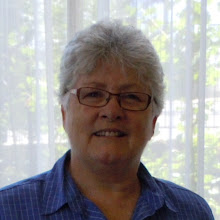
The tour usually takes an hour and a half, but today it took longer. Our guide, Leigh, was such a  character - and very chatty, too. She is a retired Chaplain and just loves the history of the mine and loves working the machinery too. She told lots of funny stories, got the children involved by having them pretend they were given different jobs, and gave plenty of opportunity for photos. After the tour we were able to go back and take photos again, pretend we were working the machinery and just have another look at everything. Tennant Creek isn't that old really. Gold was discovered here in the 1930's, triggering Australia's last gold rush. And the mines are really rich producers still. One of them was probably the richest in the amount of gold produced per ton in the world. However, it is in granite, not in nice soft rock. To smash a piece of granite the size of a thumbnail by hand
 took a strong man an hour of hard work. (That was Nathan's 'job' in the photo opposite, only he was doing it underground instead
 of above ground). The men worked in 43degC (110degF) heat up on the surface, 12 hour days, 7 days a week 363 days a year (Christmas Day and Good Friday off). If they took any other time off their credit was cut off - and they had to live on credit for the first two years until they earned enough money from the gold they found (if they were lucky) to pay their way. It was so hot up on the surface that the birds were dropping from the trees, dead from heat stroke. But down in the mines it was 52 degrees! That's roughly 125degF. And they were working in granite, which conducts the heat very efficiently. Hard physical labour, in hellish circumstances. What a nightmare. And they lived in equally rough circumstances too. But later on in the Social History museum, it noted that although the miners' tents had beaten earth floors, they were kept so clean you could have eaten off them. Hmmmmm. Even when the families began to join the miners in later years, water was so scarse that it was used first for cooking the dinner; it was saved and used for washing up; it was still saved and used for their bath (once a week) in a tin tub. Mum and children then Dad. Then it was used for washing the clothes. Then it was used to water what few vegies they were trying to grow.
 character - and very chatty, too. She is a retired Chaplain and just loves the history of the mine and loves working the machinery too. She told lots of funny stories, got the children involved by having them pretend they were given different jobs, and gave plenty of opportunity for photos. After the tour we were able to go back and take photos again, pretend we were working the machinery and just have another look at everything. Tennant Creek isn't that old really. Gold was discovered here in the 1930's, triggering Australia's last gold rush. And the mines are really rich producers still. One of them was probably the richest in the amount of gold produced per ton in the world. However, it is in granite, not in nice soft rock. To smash a piece of granite the size of a thumbnail by hand
 took a strong man an hour of hard work. (That was Nathan's 'job' in the photo opposite, only he was doing it underground instead
 of above ground). The men worked in 43degC (110degF) heat up on the surface, 12 hour days, 7 days a week 363 days a year (Christmas Day and Good Friday off). If they took any other time off their credit was cut off - and they had to live on credit for the first two years until they earned enough money from the gold they found (if they were lucky) to pay their way. It was so hot up on the surface that the birds were dropping from the trees, dead from heat stroke. But down in the mines it was 52 degrees! That's roughly 125degF. And they were working in granite, which conducts the heat very efficiently. Hard physical labour, in hellish circumstances. What a nightmare. And they lived in equally rough circumstances too. But later on in the Social History museum, it noted that although the miners' tents had beaten earth floors, they were kept so clean you could have eaten off them. Hmmmmm. Even when the families began to join the miners in later years, water was so scarse that it was used first for cooking the dinner; it was saved and used for washing up; it was still saved and used for their bath (once a week) in a tin tub. Mum and children then Dad. Then it was used for washing the clothes. Then it was used to water what few vegies they were trying to grow.
Leigh helped us pan for gold dust from the mullock heaps outside the mine. Without success of course. It is a messy business and my nice new, once clean sneakers are no longer clean! Or my crop pants, for that matter. Not to worry, the experience was the important thing. Then I went up the stairs while Peter and Nathan went by car up to the upper level. On the way Leigh started talking to another chap who had been fossicking through some granite chips around some machinery and had found some fool's gold. So she and I grabbed a couple of handfuls too and put water in the pan and - several bits of fool's gold and even a tiny bit of what is probably real gold. Not enough to make my fortune, mind you, but worth keeping for Nathan's collection.
Then we visited the Social History Museum, which was truly interesting as well. I love history of any  kind, but social history is probably my favourite kind. This was all involved with the history of Tennant Creek so it only dealt with the time from the 1930's onward but boy, talk about pioneers - after the time when it was just the men who came for the mining, to the time when they were able to bring their wives and families. Living in a tent with a compressed anthill floor, and a lean-to beside it made of mulga
 brush (i.e. shrub twigs) for shade. Water was more expensive than gold, and came from miles away. When the storms (wet season) came they lived basically on bread, meat and tinned food. We read stories of life there that make you admire the courage and fortitude of those men and women who braved the distance, heat, flies and loneliness. There's no way we could ever consider ourselves
 pioneers in our air-conditioned comfort with all mod cons and instant communication! Nathan and I spent a long time listening to stories over the bakelite wireless (photo, left). You pressed a button and letters from a woman to her sister and neice back in
 the city were read out loud. They were fascinating, so descriptive of her everyday adventures in Tennant Creek, as well as of her trip down to the 'big smoke' (city) and the trip back again, when bridges were washed out by early storms and no-one
 could get through. That still happens, by the way.
 kind, but social history is probably my favourite kind. This was all involved with the history of Tennant Creek so it only dealt with the time from the 1930's onward but boy, talk about pioneers - after the time when it was just the men who came for the mining, to the time when they were able to bring their wives and families. Living in a tent with a compressed anthill floor, and a lean-to beside it made of mulga
 brush (i.e. shrub twigs) for shade. Water was more expensive than gold, and came from miles away. When the storms (wet season) came they lived basically on bread, meat and tinned food. We read stories of life there that make you admire the courage and fortitude of those men and women who braved the distance, heat, flies and loneliness. There's no way we could ever consider ourselves
 pioneers in our air-conditioned comfort with all mod cons and instant communication! Nathan and I spent a long time listening to stories over the bakelite wireless (photo, left). You pressed a button and letters from a woman to her sister and neice back in
 the city were read out loud. They were fascinating, so descriptive of her everyday adventures in Tennant Creek, as well as of her trip down to the 'big smoke' (city) and the trip back again, when bridges were washed out by early storms and no-one
 could get through. That still happens, by the way.
They also had a Gem Museum and Peter and Nathan spent quite a bit of time there. I had a look too, but by now my ankles, which had been reminding me since halfway through the mine tour that I had done some damage to them both yesterday were screaming at me. I tried sitting in the closed-in verandah but the mosquitos attacked me with gusto (the outer doors were left open) so I retreated back to the main reception area until the guys finished.
Back home for a very late lunch. Then Peter went off to see The Pebbles and the Telegraph Station. I really wanted to go but I had made the mistake of taking my shoes off and there was no way I could get them back on again or walk on those poor ankles any more either. In fact you can't tell I have ankles - they are so swollen and puffy and bruised. Oh oh - here we go again!
The Pebbles are like the Devil's Marbles only much  smaller. They spread for a huge area
 though. You are not permitted to go beyond the fence here, according to our tourist guide book.
 smaller. They spread for a huge area
 though. You are not permitted to go beyond the fence here, according to our tourist guide book.
Until the goldrush in the 1930's the Telegraph Station was the only European habitation at Tennant Creek. What a lonely life that would have been. Just a few people, the only face-to-face contact with the outside world was the occasional passing traveller. But such a vital link in the communication chain across the continent and with the rest of the world. There is an often-used phrase about Australia 'the tyranny of distance' and it has had a huge effect on us as a nation right from the start. So it was a really important role played by the brave people out here. And it wasn't just sitting in the shade tapping a key either, the job involved going out for days at a time maintaining the telegraph lines. Being so isolated and having limited material the men were forcel to rely on their bush skills and ingenuity. They had to have a well equipped blacksmith shop too, to shoe horses and repair wagons as well as make and repair various metal items for building, cooking and gardening. Now they were true pioneers too!
 passing traveller. But such a vital link in the communication chain across the continent and with the rest of the world. There is an often-used phrase about Australia 'the tyranny of distance' and it has had a huge effect on us as a nation right from the start. So it was a really important role played by the brave people out here. And it wasn't just sitting in the shade tapping a key either, the job involved going out for days at a time maintaining the telegraph lines. Being so isolated and having limited material the men were forcel to rely on their bush skills and ingenuity. They had to have a well equipped blacksmith shop too, to shoe horses and repair wagons as well as make and repair various metal items for building, cooking and gardening. Now they were true pioneers too!


